
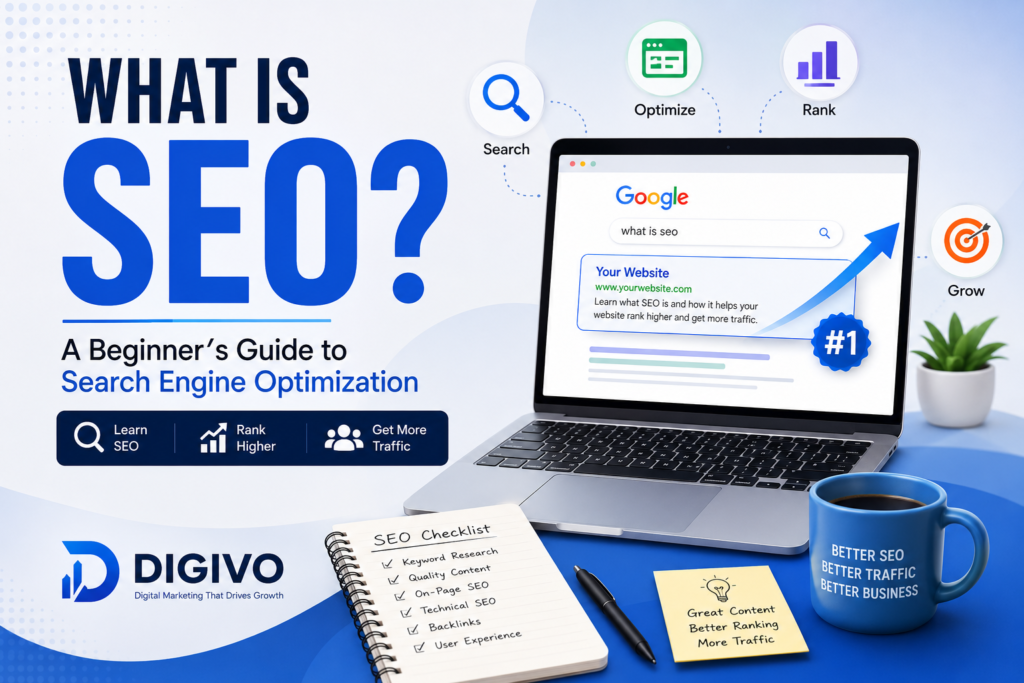
SEO: Complete Guide to Search Engine Optimization for Beginners
Search Engine Optimization (SEO) is one of the most important digital marketing strategies for businesses, bloggers, startups, and websites that want to attract more visitors from search engines. Whether you have a small business website, an online store, a personal blog, or a digital marketing agency website, SEO can help your pages appear higher in Google search results and reach the right audience.
In today’s competitive digital world, simply creating a website is not enough. Your website needs to be visible when people search for products, services, information, or solutions related to your business. This is where SEO marketing becomes important.
In this complete SEO guide, you will learn what SEO is, how SEO works, why SEO is important, different types of SEO, keyword research, on-page SEO, off-page SEO, technical SEO, local SEO, content optimization, link building, and the best SEO practices you can use to improve your website’s search engine rankings.
What Is SEO?
SEO stands for Search Engine Optimization. SEO is the process of optimizing a website and its content to improve its visibility in search engine results pages (SERPs).
When someone searches for something on Google, the search engine analyzes millions of web pages to determine which pages are most relevant and useful. SEO helps search engines understand your website and helps users find your content.
For example, if you own a digital marketing agency and someone searches for “digital marketing agency near me,” you want your website to appear among the relevant search results. Using effective SEO strategies can increase the chances of your website being discovered by potential customers.
SEO focuses on several important areas, including:
- Keyword research
- High-quality content
- On-page SEO
- Technical SEO
- Off-page SEO
- Local SEO
- Website speed
- Mobile optimization
- Internal linking
- Backlinks
- User experience
Why Is SEO Important?
SEO is important because search engines are one of the primary ways people discover information, products, services, and businesses online.
A website that appears on the first page of search results can potentially receive significantly more organic traffic than a website that appears on later pages.
Here are some major benefits of SEO.
1. Increase Organic Traffic
One of the biggest benefits of SEO is increasing organic traffic.
Organic traffic refers to visitors who reach your website through unpaid search engine results. A strong SEO strategy can help your website rank for relevant keywords and attract people who are already searching for information related to your business.
2. Improve Online Visibility
SEO helps improve your website’s visibility in search engines.
When your website ranks for multiple relevant keywords, more people can discover your brand. Consistent visibility can help build brand awareness and establish your business as a trusted source of information.
3. Generate More Leads
SEO can help businesses attract potential customers who are actively searching for their products or services.
For example, someone searching for “best digital marketing agency for small business” may already have an interest in hiring a marketing agency. Ranking for relevant search terms can help you reach such potential customers.
4. Increase Website Credibility
Websites that consistently provide useful, accurate, and helpful information can build credibility with users.
High-quality content, a professional website, positive user experience, and authoritative backlinks can all contribute to a stronger online presence.
5. Cost-Effective Digital Marketing
Unlike paid advertising, organic search traffic does not require you to pay for every click.
SEO does require time, effort, content creation, technical improvements, and sometimes professional SEO services, but successful SEO can continue generating organic traffic over a long period.
How Does SEO Work?
Search engines use automated systems to discover, understand, organize, and rank web pages.
Although search engine algorithms are complex, you can understand SEO through three basic concepts:
Crawling
Search engines use automated programs called crawlers or bots to discover web pages.
These crawlers follow links and explore websites to find new and updated content.
Indexing
After discovering a webpage, a search engine analyzes and stores information about that page in its index.
If a page is eligible for indexing, it can potentially appear in search results.
Ranking
When a user performs a search, the search engine evaluates relevant indexed pages and determines which results should appear.
Many factors can influence rankings, including relevance, content quality, website accessibility, page experience, links, and other signals.
This is why SEO optimization is important for websites that want to compete in organic search.
Types of SEO
SEO is not a single technique. It includes several different areas of optimization.
The major types of SEO include:
- On-Page SEO
- Off-Page SEO
- Technical SEO
- Local SEO
- Content SEO
- Mobile SEO
- E-commerce SEO
Let’s understand each type.
1. On-Page SEO
On-page SEO refers to optimizing elements on your website and individual webpages.
Important on-page SEO factors include:
- SEO title
- Meta description
- Headings
- Keywords
- Content quality
- URL structure
- Internal links
- Image optimization
- Image alt text
- Content readability
For example, if your target keyword is “SEO for beginners,” you can naturally use the keyword in the page title, introduction, relevant headings, URL, and body content.
However, avoid repeating the same keyword excessively. Search engines are designed to understand topics and context, so natural language and useful content are more important than keyword stuffing.
2. Off-Page SEO
Off-page SEO refers to activities performed outside your website that can help build your website’s authority and reputation.
One of the most well-known off-page SEO techniques is link building.
A backlink is a link from another website to your website. Relevant, editorial backlinks from reputable websites can help search engines discover your content and may contribute to your site’s authority.
Other off-page SEO activities include:
- Digital PR
- Brand mentions
- Content promotion
- Business listings
- Relevant citations
- Relationship building
- Guest contributions where appropriate
The focus should be on earning valuable links and mentions rather than creating large numbers of low-quality backlinks.
3. Technical SEO
Technical SEO focuses on improving the technical aspects of your website so that search engines can efficiently crawl and understand your pages.
Important technical SEO factors include:
- Website speed
- Mobile responsiveness
- HTTPS
- XML sitemap
- Robots.txt
- Canonical URLs
- Structured data
- Crawlability
- Indexability
- Core Web Vitals
- Clean URL structure
A technically optimized website provides a better foundation for SEO.
4. Local SEO
Local SEO helps businesses improve their visibility for searches related to a specific location.
Local SEO is especially important for restaurants, gyms, agencies, doctors, salons, retailers, and other businesses that serve customers in specific geographic areas.
For example, a user might search:
“digital marketing agency in Delhi”
or
“SEO company near me.”
Optimizing your Google Business Profile, maintaining accurate business information, collecting genuine reviews, and creating useful location-specific content can support local search visibility.
5. Content SEO
Content is a major part of SEO.
Content SEO involves creating and optimizing useful content that satisfies what users are searching for.
Examples include:
- Blog posts
- Guides
- Tutorials
- Product pages
- Service pages
- Case studies
- FAQs
- Videos
- Infographics
Instead of creating content only to insert keywords, focus on answering the user’s question better than competing pages.
Keyword Research: The Foundation of SEO
Keyword research is the process of discovering search terms that people use in search engines.
Keywords help you understand what your target audience is searching for.
For example, a digital marketing website might target keywords such as:
- SEO
- search engine optimization
- SEO services
- SEO marketing
- SEO strategy
- SEO for beginners
- SEO tips
- website SEO
- on-page SEO
- off-page SEO
- technical SEO
- local SEO
- keyword research
- SEO tools
- Google SEO
- organic traffic
You should also research long-tail keywords.
Long-tail keywords are usually more specific search queries, such as:
“how to improve SEO for a small business website”
or
“SEO strategy for beginners.”
These keywords may have lower search volume than broad keywords, but they can be highly relevant and may better match specific search intent.
How to Choose the Right SEO Keywords
When choosing keywords, consider four important factors:
Search Volume
Search volume indicates how frequently people search for a keyword.
High-volume keywords can provide greater traffic opportunities, but they often have stronger competition.
Keyword Competition
Highly competitive keywords can be difficult for a new website to rank for.
A balanced SEO strategy should include a combination of competitive keywords and more specific long-tail keywords.
Search Intent
Search intent describes what the user wants when they search.
Common types include:
- Informational intent
- Navigational intent
- Commercial intent
- Transactional intent
Understanding search intent helps you create content that matches what users actually want.
Relevance
A keyword should be relevant to your website, business, and audience.
Ranking for an unrelated keyword may bring traffic but is unlikely to generate valuable results.
On-Page SEO Best Practices
To improve your on-page SEO, optimize the following elements.
SEO Title
Your SEO title should clearly describe the page and naturally include your primary keyword when appropriate.
Example:
SEO: Complete Guide to Search Engine Optimization for Beginners
Meta Description
A meta description summarizes what users can expect from your page.
Example:
Learn what SEO is, how search engine optimization works, and discover practical SEO strategies to improve rankings, organic traffic, and online visibility.
Headings
Use headings such as H1, H2, and H3 to organize your content.
Your main topic should be represented by the H1, while H2 and H3 headings should organize supporting topics.
URL
Keep URLs short, descriptive, and easy to understand.
Example:
/seo-guide/
Internal Links
Internal links connect one page of your website to another.
For example, your SEO article could link to related articles about:
- Keyword research
- Digital marketing
- Local SEO
- Content marketing
- Google Business Profile
Internal links can help users discover more content and help search engines understand relationships between pages.
Why Content Quality Matters for SEO
Creating high-quality content is one of the most important parts of modern SEO.
Good SEO content should:
- Answer the user’s question
- Be easy to read
- Provide useful information
- Use accurate information
- Have clear headings
- Include relevant examples
- Avoid unnecessary repetition
- Be regularly updated when information changes
A 2,500-word article is not automatically better than a 1,000-word article.
The goal should be to provide the right amount of useful information for the search intent.
SEO and Keyword Density
Keyword density refers to how frequently a keyword appears in a piece of content.
Many beginners believe that using a keyword as many times as possible will improve rankings. This is not a good SEO strategy.
For example, repeatedly writing:
“SEO is important because SEO helps SEO websites improve